Every winter, while most of Europe’s racing circuits sit quiet under grey skies, a different kind of season comes alive. The Spanish Winter Championship (SWC) turns the off-season into an opportunity — giving the next generation of single-seater talent a rare chance to race, learn, and grow when everyone else is on standby.
For young drivers trying to climb the motorsport ladder, that opportunity is worth more than it might first appear.
A Season Built for Development, Not Just Competition
Most junior categories run on a predictable calendar: a spring-to-autumn season, followed by months of simulator work, gym sessions, and waiting. The SWC breaks that pattern. By racing through the winter months, it gives drivers something the standard calendar can’t: continuous seat time during the exact period when their rivals are off the track.
That continuity matters. Racecraft, reaction speed, and car feel are perishable skills — they fade without practice. Drivers who compete in the SWC arrive at the following season’s championship sharper, more race-fit, and further ahead in their development curve than those who spent the winter watching from the sidelines.
Cold-Weather Racing as a Development Accelerator
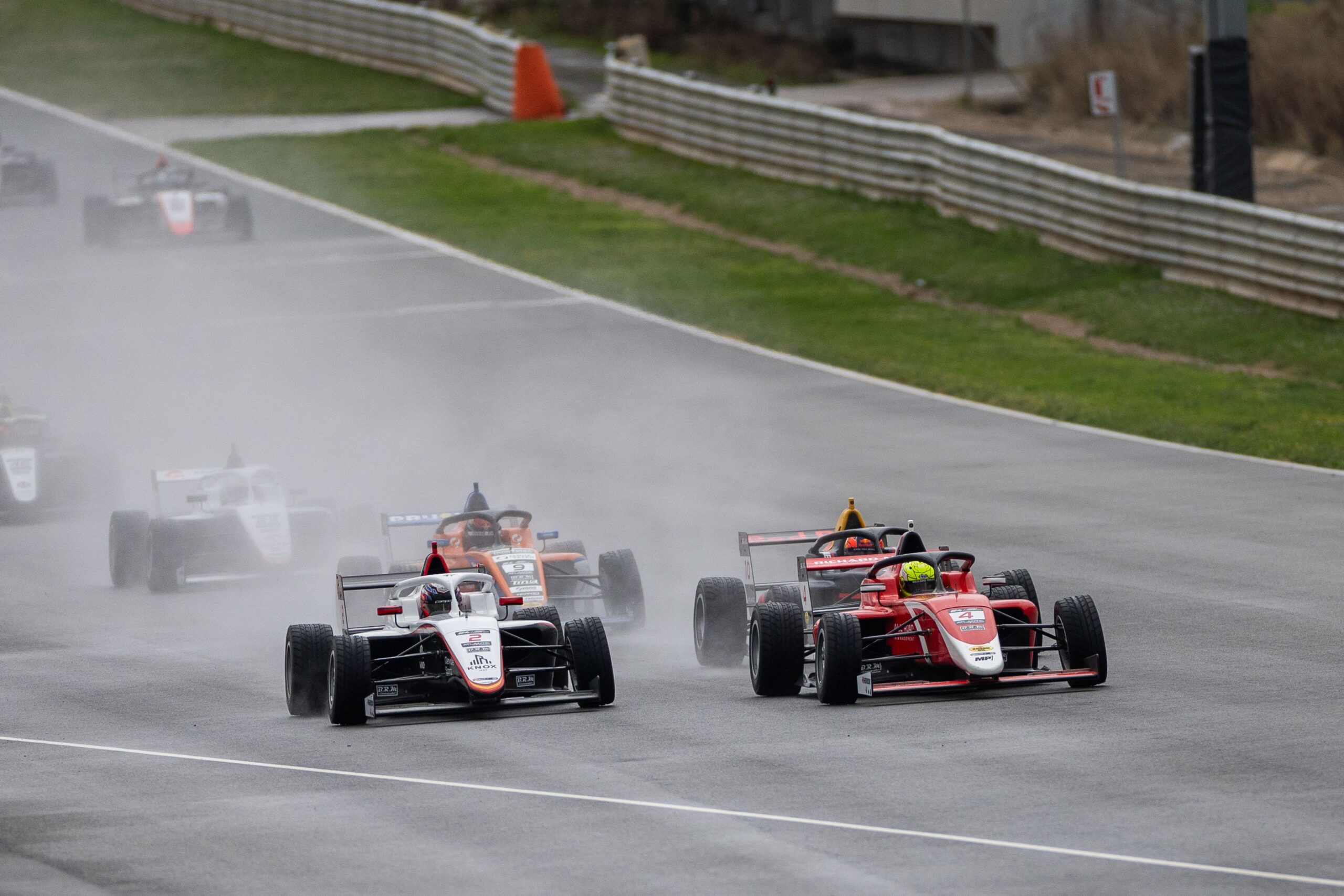
Winter conditions in Spain — cooler track temperatures, shifting grip levels, unpredictable weather windows — create a more technical, less forgiving racing environment. For a young driver, that’s exactly the kind of pressure that builds real skill.
Adapting to a track that behaves differently lap to lap forces drivers to read data more carefully, communicate better with engineers, and make quicker in-the-moment decisions. These are the same competencies that separate good junior drivers from the ones who go on to succeed in F4, Formula Regional, and beyond.
In other words: the tougher conditions aren’t a drawback of winter racing — they’re the point.
A Proving Ground Under Real Scrutiny
The SWC isn’t an isolated bubble. It runs under the same EPIC Championships structure that oversees the F4 Spanish Championship and Eurocup-3, which means the paddock, the officials, and — increasingly — the scouts paying attention are the same people who shape careers in the categories above it.
For a young driver, that visibility is part of the value proposition. A strong winter campaign isn’t just personal development — it’s a portfolio. Consistent results, on-camera performances, and disciplined racecraft during the SWC season build a track record that team principals and talent scouts can point to when the following year’s silly season begins.
Bridging the Gap Between Karting and Single-Seaters
One of the most underrated roles the SWC plays is as a transition category. Moving from karting into a full single-seater program is one of the steepest learning curves in motorsport — new physics, new car dynamics, new levels of commitment. Drivers who use the winter season as a bridge arrive at their first full F4 campaign already comfortable with the car, the categories’ technical demands, and the rhythm of a race weekend.
That head start compounds. A driver who enters spring already race-sharp is a driver who can focus their energy on fine-tuning performance, rather than catching up on the basics.
Why This Matters for the Future of Motorsport
Motorsport’s talent pipeline is only as strong as the opportunities available to young drivers before they reach the top categories. Championships like the SWC widen that pipeline — giving more drivers more track time, more competitive experience, and more chances to be seen, regardless of when their home calendar happens to run.As junior motorsport continues to professionalize, off-season championships are likely to become an even more standard part of a driver’s development path. The SWC is already showing what that model looks like in practice: a proving ground that turns a quiet part of the calendar into one of the most formative stretches of a young driver’s season.